The global steel industry is undergoing a decisive shift toward high-strength, lightweight, and low-carbon construction materials. Standards for structural infrastructure, automotive lightweighting, and earthquake-resistant buildings increasingly mandate higher yield strengths (e.g., 400 MPa, 500 MPa, and beyond) alongside superior weldability and ductility.
Achieving these balanced properties requires advanced microalloying. Among current industrial solutions, Vanadium-Nitrogen (VN) Alloy has proven to be one of the most effective and economically viable additives for producing High-Strength Low-Alloy (HSLA) steels and high-grade rebar.
In this article, we break down the metallurgical role of VN alloy and why it has become the standard microalloying agent for high-strength steelmakers worldwide.
The superior performance of Vanadium-Nitrogen alloy lies in the synergy between vanadium (V) and nitrogen (N).
V4C3); much of it remains dissolved in the austenite/ferrite matrix.When VN alloy is introduced, the elevated presence of nitrogen drastically lowers the solubility limit of vanadium in austenite. This forces vanadium to precipitate early as extremely fine vanadium carbonitrides, V(C,N)
These nanoscale precipitates block dislocation movement within the crystalline lattice.
This mechanism generates substantial increases in yield strength without compromising elongation.
V(C,N) particles precipitate in the un-recrystallized austenite region and pin austenite grain boundaries, suppressing grain growth during hot rolling. A finer ferrite grain structure directly enhances impact toughness and low-temperature performance—a critical advantage for structural steels used in cold climates or seismic zones.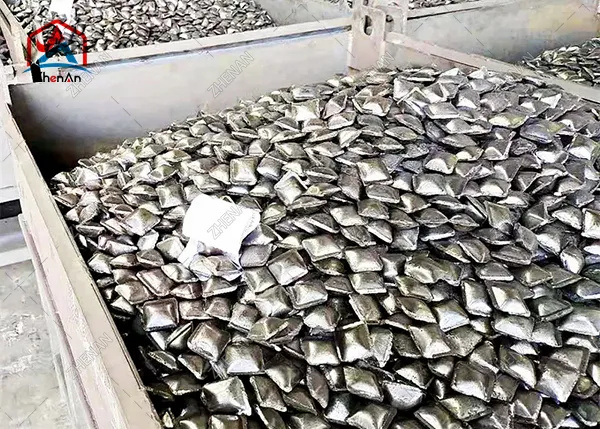
Traditionally, high yield strengths were obtained through thermo-mechanical processing (like water-quenching lines). However, microalloying with VN enables steelmakers to reach target yield points (such as ASTM Grade 75/80 or HRB500E) directly via hot rolling, eliminating the risk of un-tempered martensite, which causes brittleness.
Unlike increasing carbon (C) or manganese (Mn) content to raise strength, microalloying with VN allows producers to maintain a low Carbon Equivalent (CEQ).
Avoids heat-affected zone (HAZ) cracking during welding.
Eliminates the need for preheating during field construction.
In earthquake-prone regions, reinforcing rebar requires a high tensile-to-yield ratio (Rm/ReL≥1.25) and high uniform elongation (Agt≥9%). VN alloy produces a continuous, ductile core throughout the bar, ensuring predictable deformation behavior under cyclic loads.
| Application Sector | Typical Products | Value Delivered by VN Alloy |
| Civil Infrastructure | Seismic-grade Rebars (e.g., HRB500E, B500B) | High tensile strength, superior bending & welding properties |
| Structural Engineering | Heavy H-beams, angle channels, hollow sections | Reduced section thickness, overall building weight savings |
| Pipeline Steel | API 5L (X60, X70, X80) line pipes | High fracture toughness, resistance to sour gas cracking |
| Automotive Components | Chassis members, steering knuckles, wheel hubs | Lightweighting, high fatigue resistance without costly heat treatment |
Beyond the physical properties of the finished steel, the production economics are compelling:
Higher Vanadium Efficiency: Nitrogen allows mills to reduce vanadium consumption by 30–40% while matching the same mechanical performance specs.
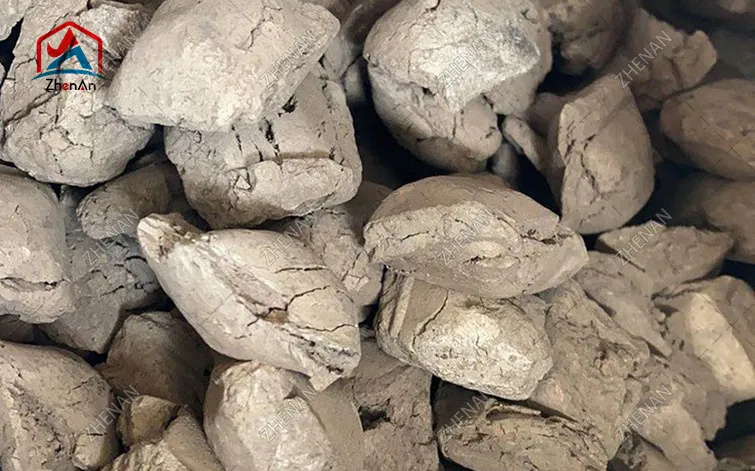
Predictable Recovery Rates: High-density VN briquettes penetrate the slag layer smoothly during tapping, resulting in typical recovery rates exceeding 85% to 92%.
Thermal Stability: VN carbonitrides are thermally stable at rolling temperatures, reducing grain coarsening even during prolonged reheating cycles.
Producing high-strength steel with high yield consistency requires consistent, low-impurity alloy additions.
As a leading Chinese metallurgical materials manufacturer, our manufacturing facility produces high-grade Vanadium-Nitrogen briquettes (VN12 / VN16) optimized for modern EAF and BOF steelmaking operations:
Homogeneous density for rapid slag penetration and controlled dissolution.
Low trace elements (S, P, O, H) to protect clean steel practices.
Global export experience, complete with SGS/BV third-party inspection certificates and reliable sea-freight logistics.
Ready to optimize your alloying recipe?