Magnesium (Mg) is one of the most widely used alloying elements in modern pyrometallurgy, serving as the foundational building block for structural wrought extrusions, naval-grade rolled plate, and high-integrity automotive castings. When dissolved in molten aluminum, magnesium provides solid-solution strengthening, alters surface tension, and combines with elements such as silicon, zinc, and copper to enable precipitation hardening.
However, magnesium is notoriously volatile in molten aluminum. At typical melt temperatures (700°C to 760°C), pure magnesium exhibits a vapor pressure several orders of magnitude higher than aluminum, leading to rapid vaporization, oxidation burn-off, and complex dross kinetics. More critically, metallurgical phase equilibria dictate that adding magnesium outside precise stoichiometric boundaries does not simply hit a point of diminishing returns—it introduces severe microstructural defects.
Key Metallurgy Takeaway: Excess magnesium reduces hot workability, causes severe quench sensitivity, induces catastrophic intergranular stress corrosion cracking (IGSCC), forms insoluble intermetallic embrittlement phases, and drastically lowers downstream extrusion speeds.
Physical Chemistry of Magnesium in Molten Aluminum
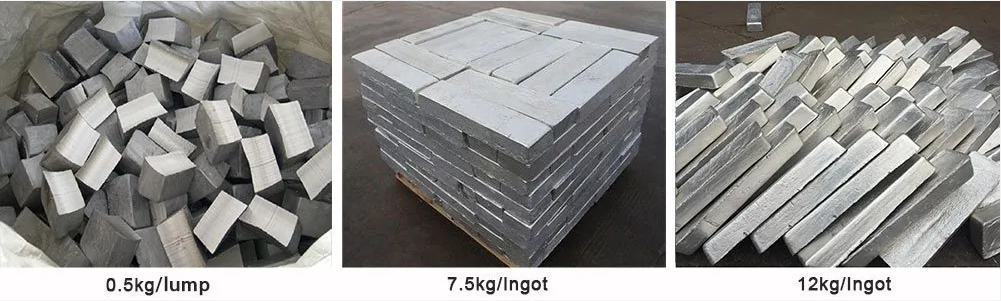
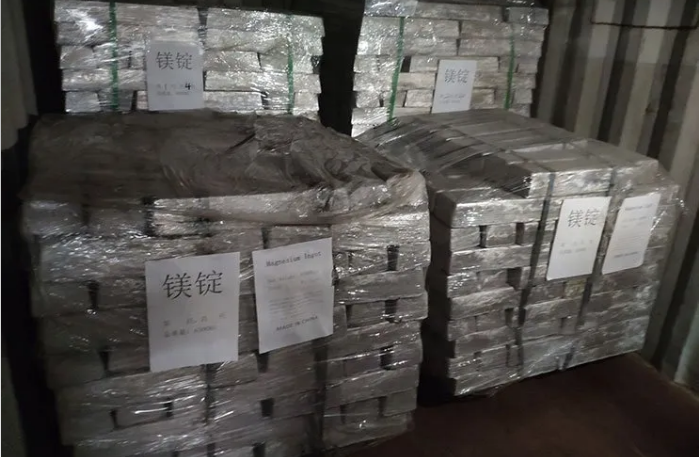
Managing magnesium additions begins with understanding the pyrometallurgical behavior of pure magnesium ingots charged into molten aluminum baths.
High Vapor Pressure & Oxidation Kinetics
At 730°C, the vapor pressure of pure magnesium is approximately 380 Pa, compared to less than 10-7 Pa for molten aluminum. When magnesium ingots are introduced to the bath surface without mechanical immersion, local temperatures rapidly vaporize the metal. Furthermore, magnesium exhibits a much stronger thermodynamic affinity for oxygen than aluminum:
- Direct Oxidation: 2Mg(l) + O2(g) → 2MgO(s)
- Spinel Formation: MgO(s) + 2Al(l) + 1.5O2(g) → MgAl2O4(s)
Dross Generation & Tool Wear
Magnesium aluminate spinel (MgAl2O4) particles are exceptionally hard (Mohs hardness 8) and possess a density (3.58 g/cm3) close to liquid aluminum. Rather than separating cleanly into the surface dross, spinel inclusions remain suspended throughout the melt bath.
- Inclusions score and wear out extrusion dies and rolling rolls prematurely.
- They cause wire breakage during high-speed cold drawing.
- For every 0.10% excess magnesium burned away through surface flaring, melt skimming generates an estimated 1.5 to 2.2 kg of additional dross per ton of liquid metal.
Alloy Metallurgy & Grade-Specific Case Studies
1.6xxx Series (Al-Mg-Si): Stoichiometric vs. "Excess Silicon" Strategy
The mechanical strength of 6xxx series alloys (AA6063, AA6061, AA6082) depends on the precipitation sequence of the metastable precursor phase β″-Mg2Si.
- The Stoichiometric Ratio: The theoretical mass ratio of Mg to Si required to produce neutral Mg2Si is 1.73 : 1.
- The Excess Magnesium Penalty: Operating above 1.73:1 creates an "excess magnesium" state. Magnesium in solid solution significantly elevates the alloy's high-temperature flow stress. Industrial extrusion trials confirm that for every 0.10% Mg added above stoichiometric balance, extrusion ram speed must be reduced by 15% to 30% to prevent profile surface tearing.
- The Excess Silicon Balance: Modern casthouses adopt an excess silicon practice, targeting an Mg:Si ratio between 1.0 : 1 and 1.3 : 1 (e.g., 0.45%–0.52% Mg and 0.40%–0.52% Si). The surplus Si accelerates artificial aging kinetics without increasing hot extrusion resistance.
2. 5xxx Series (Al-Mg): The Sensitization Threshold
Non-heat-treatable 5xxx alloys (AA5052, AA5083, AA5456) rely on solid-solution strengthening and work-hardening for marine hulls, chemical tankers, and cryogenic storage.
- The 3.0%–3.5% Sensitization Limit: While magnesium solid solubility reaches over 15% at eutectic temperatures, it drops below 1.5% at room temperature. When magnesium content exceeds 3.0% to 3.5%, the alloy becomes vulnerable to thermal sensitization when exposed to service temperatures between 50°C and 150°C.
- IGSCC Failure: Supersaturated Mg diffuses to high-angle grain boundaries, forming a continuous network of the anodic β-phase (Al3Mg2). In marine chloride environments, this boundary film dissolves rapidly, triggering catastrophic Intergranular Stress Corrosion Cracking (IGSCC).
- Smelter Target Window: For structural marine plates like AA5083 (specification: 4.0%–4.9% Mg), casthouses constrain additions to 4.20%–4.45% Mg while maintaining manganese (≥ 0.40%) and chromium to disrupt grain boundary continuity.
3.Cast Alloys (A356 / AlSi7Mg): Ductility & the Iron Trap
In hypoeutectic casting alloys (A356/A357), silicon provides melt fluidity while magnesium delivers precipitation hardening during T6 heat treatment.
- Strength Increment: Each 0.05% Mg increment increases yield strength by approximately 12 to 15 MPa after artificial aging.
- The π-Phase Embrittlement: When Mg exceeds 0.38% to 0.40% in melts containing background iron (Fe ≥ 0.12%), magnesium combines with iron and silicon to form brittle π-phase intermetallics (Al8FeMg3Si6). These Chinese-script particles do not dissolve during standard solutionizing (535°C–540°C), causing elongation to drop sharply from ≥ 8% to below 3%.
- Target Window: Critical automotive wheel and structural aerospace castings restrict target magnesium to 0.32% to 0.37%.
Grade-Specific Magnesium Ratios & Operational Limits
| Alloy Grade |
Nominal Range (%) |
Ideal Target (%) |
Governing Ratio / Limit |
Consequences of Excess Magnesium |
| AA6063 |
0.45 – 0.90 |
0.48 – 0.54 |
Mg:Si = 1.0 – 1.3 : 1 |
Mg:Si > 1.73 reduces extrusion speeds by 20%–30% and coarsens precipitates. |
| AA6061 |
0.80 – 1.20 |
0.90 – 1.05 |
Mg:Si ≈ 1.4 – 1.5 : 1 |
Increases quench sensitivity; promotes surface hot-cracking during DC casting. |
| AA5083 |
4.00 – 4.90 |
4.20 – 4.45 |
Mn ≥ 0.40% buffer |
Mg > 4.5% triggers continuous β-phase boundary films and severe IGSCC under heat. |
| AA7075 |
2.10 – 2.90 |
2.25 – 2.50 |
Zn:Mg = 2.4 – 2.8 : 1 |
Mg > 2.6% precipitates brittle T-phase (Al2Mg3Zn3), lowering fracture toughness. |
| A356.0 |
0.25 – 0.45 |
0.32 – 0.37 |
Fe < 0.12% limit |
Mg > 0.40% forms insoluble π-phase platelets, dropping elongation below 3%. |
Pyrometallurgical Practice: Maximizing Magnesium Recovery
Because magnesium oxidizes easily, casthouse addition techniques dictate whether target chemistry is achieved efficiently:
- Manual Surface Charging (70%–80% Recovery): Charging pure ingots directly onto the open bath causes them to float, flare violently, and generate heavy dross and MgO fumes.
- Submerged Bell Plunging (88%–92% Recovery): Preheated ingots are locked in a refractory bell and submerged to the furnace hearth, using bath metallostatic pressure to suppress vaporization.
- Master Alloy Charging (94%–97% Recovery): Introducing magnesium via Al-Mg (50/50) master alloy avoids flaring due to higher alloy density and lower localized activity.
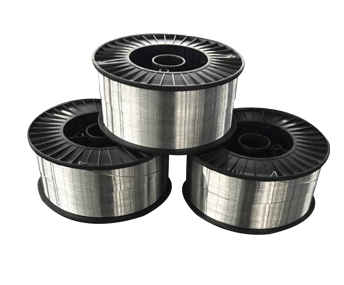
- Automated Cored Wire Injection (96%–98% Recovery): Feeding aluminum-sheathed magnesium wire directly into the transfer launder provides precise compositional trimming before in-line degassing.
Melt Refining & Ingot Quality Standards
Magnesium increases hydrogen absorption in molten aluminum via ambient moisture pickup: Mg(l) + H2O(g) → MgO(s) + 2[H]dissolved.
- Rotary Degassing: Casthouses run argon mixed with 0.5% to 1.5% Cl2 gas to float suspended spinel inclusions and lower hydrogen levels below 0.12 cm3 / 100g Al.
- Pre-Pour Filtration: Melt passes through 30 to 50 PPI Ceramic Foam Filters (CFF) to trap micro-inclusions before direct-chill casting.
- Ingot Preheating Safety: Magnesium ingots must be preheated to 150°C–200°C for at least 2 hours before charging to eliminate surface moisture (Mg(OH)2) and prevent molten metal explosions.