For international buyers and procurement managers, understanding the nuances of silicon carbide powder is not merely a technical requirement—it is a competitive necessity. Whether it is used as a deoxidizer in steelmaking, a high-performance abrasive, or a critical component in electric vehicle (EV) power electronics, SiC offers a unique combination of hardness, thermal conductivity, and chemical stability.
What is Silicon Carbide (SiC)?
Silicon carbide is a compound semiconductor composed of silicon and carbon. In nature, it is exceptionally rare, found only in trace amounts in certain types of meteorites and corundum deposits. Consequently, virtually all silicon carbide used in industry is synthetically produced.
The Crystal Structure
SiC is unique because it exhibits polymorphism, meaning it can exist in more than 250 crystalline forms. The most common structures include:
Alpha Silicon Carbide (α-SiC): The most common polymorph, characterized by a hexagonal crystal structure. It is stable at temperatures above 1700°C.
Beta Silicon Carbide (β-SiC): This form has a cubic crystal structure (similar to diamond) and is formed at temperatures below 1700°C.
Key Physical and Chemical Properties
Why is SiC powder so sought after? Its performance metrics are unparalleled:
Extreme Hardness: With a Mohs hardness of 9.0 to 9.5, it is second only to diamond and boron carbide.
High Thermal Conductivity: SiC dissipates heat faster than most metals, making it ideal for high-temperature environments.
Low Thermal Expansion: It resists warping or cracking under sudden temperature changes (excellent thermal shock resistance).
Chemical Inertness: It is highly resistant to corrosion from acids, alkalis, and molten salts, even at elevated temperatures.
Semiconducting Properties: Unlike many other abrasives, SiC is a wide-bandgap semiconductor, which is revolutionizing the power electronics industry.
The Manufacturing Process: The Acheson Method and Beyond
The production of high-purity
silicon carbide powder is a capital-intensive and energy-heavy process.
The Acheson Process
Invented by Edward Goodrich Acheson in 1891, this remains the primary method for large-scale production.
Raw Materials: High-purity silica sand (SiO2) and petroleum coke (C) are mixed. In some cases, sawdust and salt are added to control porosity and remove impurities.
The Electric Furnace: The mixture is placed in a resistance furnace. An electric current is passed through a graphite core, heating the surrounding mixture to temperatures between 1,700°C and 2,500°C.
Chemical Reaction: The reaction SiO2 + 3C → SiC + 2CO occurs.
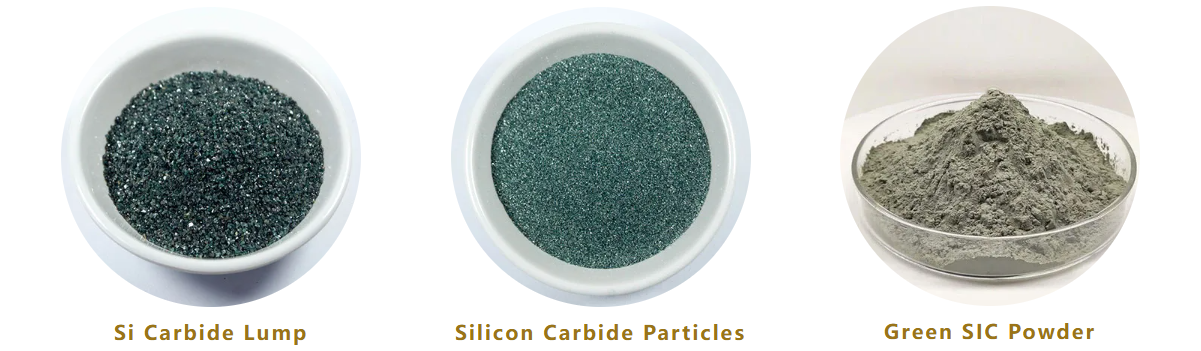
Harvesting: Once the furnace cools, a large "cylindrical" mass of SiC crystals is formed. The core contains the highest purity (Green SiC), while the outer layers yield Black SiC.
Processing into Powder
Once the crude crystals are harvested, they undergo several stages of processing:
Crushing & Milling: Using jaw crushers, hammer mills, or ball mills to reduce the crystals to powder.
Grading (Sizing): Using vibrating screens or air classifiers to ensure the powder meets specific grit sizes (e.g., FEPA, JIS, or ANSI standards).
Acid Washing & Purification: To remove residual iron, free silicon, or carbon, the powder is often treated with chemicals to reach purity levels of 98% to 99.9%.
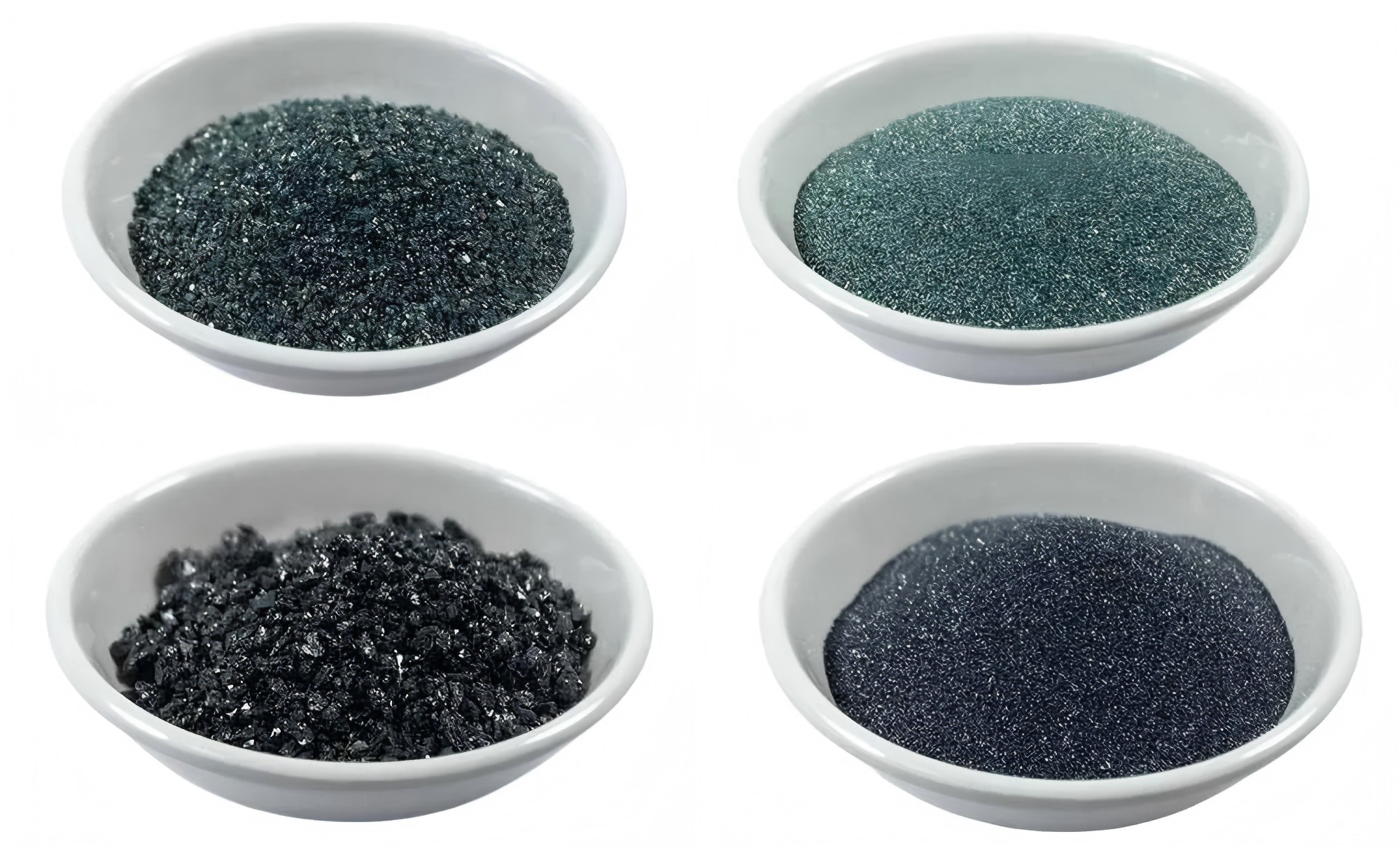
Black vs. Green Silicon Carbide: Understanding the Difference
In the global market, SiC powder is generally categorized by its color, which reflects its purity and intended use.
Black Silicon Carbide (Black SiC)
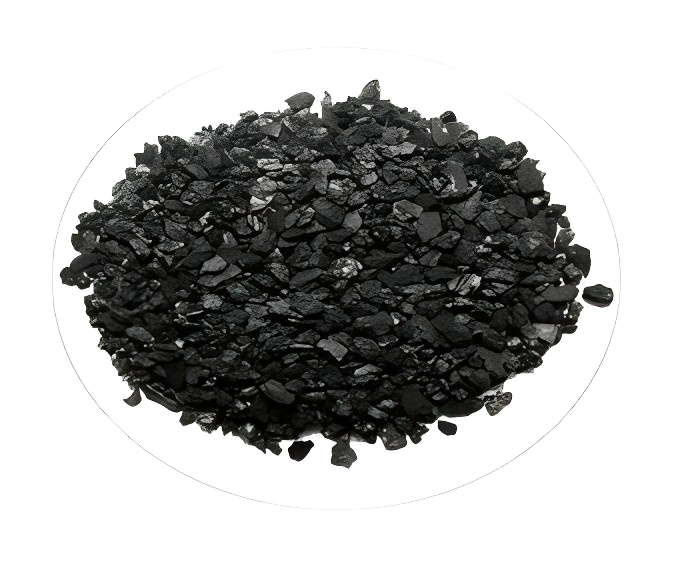
Black SiC contains approximately 95% to 98% SiC. Its dark color is due to trace amounts of iron and carbon impurities.
Characteristics: Slightly tougher but less brittle than green SiC.
Best For: Grinding high-tensile strength materials like cast iron, non-ferrous metals (copper, aluminum), and non-metallic materials (stone, rubber, wood). It is also the primary choice for metallurgical deoxidization.
Green Silicon Carbide (Green SiC)
Green SiC is the higher-purity variant, typically exceeding 99% SiC content.
Characteristics: Higher hardness and superior cutting power compared to black SiC.
Best For: Precision grinding of hard and brittle materials such as tungsten carbide, optical glass, ceramics, and semiconductor wafers.
Primary Industrial Applications
Metallurgy and Steelmaking
In the metallurgical industry,SiC powder serves as a powerful deoxidizer and fuel source in cupolas and electric arc furnaces.
Benefits:It improves the fluidity of the molten metal,enhances the silicon and carbon recovery rates,and reduces the overall energy consumption of the melting process.
Cast Iron Production:It promotes the formation of graphite flakes,leading to higher-quality gray and ductile iron castings.
Abrasives and Surface Finishing
This is perhaps the most traditional use of SiC powder.
Bonded Abrasives:Used to manufacture grinding wheels and cutting discs.
Coated Abrasives:Used in sandpapers and polishing belts.
Lapping&Polishing:Fine SiC powders are used in"slurries"for precision lapping of valves,gears,and semiconductor substrates.
Refractories and Ceramics
Due to its high melting point(it sublimes at around 2,700°C)and low thermal expansion,SiC is a premier refractory material.
Kiln Furniture:SiC plates and beams are used in ceramic kilns because they don't deform under heavy loads at extreme temperatures.
Technical Ceramics:Used in bulletproof vests,seal rings for pumps,and automotive brake discs.
Advanced Electronics(The SiC Revolution)
The 21st century has seen a surge in SiC demand for the semiconductor industry.
Power Devices:SiC-based MOSFETs and diodes are more efficient than traditional silicon components.They are essential for the fast-charging systems and inverters in Electric Vehicles(EVs).
5G Infrastructure:SiC serves as a substrate for Gallium Nitride(GaN)on SiC devices,which power high-frequency 5G base stations.
Global Quality Standards for SiC Powder
When sourcing
SiC powder internationally,buyers must navigate various grading systems:
FEPA(Federation of European Producers of Abrasives):Uses the"F"(for bonded abrasives)and"P"(for coated abrasives)prefixes(e.g.,F240,P1200).
JIS(Japanese Industrial Standard):Common in Asian markets(e.g.,#3000).
ANSI(American National Standards Institute):Standardized for the North American market.
Purity Levels Matter:
Metallurgical Grade:88%-95%SiC.
Abrasive Grade:96%-98.5%SiC.
High Purity/Ceramic Grade:99%SiC.
Silicon carbide powder is much more than a simple abrasive.It is a high-tech material that bridges the gap between traditional heavy industry and the future of clean energy.By understanding its grades,production methods,and applications,metallurgy professionals and procurement specialists can ensure they select the right product to optimize their operations and product quality.

.jpeg)