Producing high-strength rebar grades such as HRB500 and HRB600 while meeting strict nitrogen content specifications often necessitates a difficult trade-off between cost and processing: direct nitrogen injection leads to fluctuating nitrogen recovery rates and molten steel splashing, whereas over-reliance on vanadium-nitrogen alloys drives up production costs.
The advent of silicon nitride (Fe-Si3N4) has resolved this challenge. It not only offers a stable nitrogen recovery rate of 75%–85% but also leverages the deoxidizing properties of silicon, enabling controlled grain-boundary pinning and precipitation strengthening at a significantly lower cost per ton of steel.
Ferro silicon nitride is a composite ferroalloy manufactured through the high-temperature direct nitridation of ferrosilicon powder (FeSi75) under a pressurized nitrogen atmosphere:
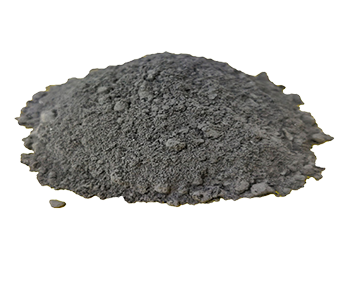
The resulting material consists predominantly of silicon nitride (β-Si3N4 and α-Si3N4) phases closely bound within an iron (Fe) solid solution matrix. The presence of metallic iron significantly improves the material's bulk density, wettability, and dissolution kinetics in molten steel compared to pure silicon nitride powder, which tends to float due to lower density.

When ferro silicon nitride is introduced into the ladle furnace (LF) or during tapping, it triggers two simultaneous metallurgical reactions:
Si + 2[O] ➔ SiO2
Silicon provides active local deoxidation, reducing dissolved oxygen in the melt and forming low-melting-point slag that floats out rapidly.
[N] Enters Molten Lattice
Nitrogen is released at the atomic level, delivering a predictable and stable recovery rate between 75% and 88% without generating excessive gas splashes.
Gaseous nitrogen injection often results in erratic absorption rates (typically below 20% to 35%) and severe splash oxidation. In contrast, the nitrogen in Fe-Si3N4 is chemically bound. As the alloy dissolves in molten steel at 1,550°C to 1,650°C, nitrogen dissolves directly into the melt without introducing unwanted hydrogen or moisture.
Dissolved nitrogen reacts with microalloying elements such as Vanadium, Aluminum, Niobium, and Titanium during cooling and rolling to form fine carbonitride precipitates:
In the production of high-strength seismic rebar (e.g., HRB400E, HRB500E), nitrogen enhances the precipitation efficiency of Vanadium. By adding 0.010% to 0.015% [N] via ferro silicon nitride, steel mills can:
The simultaneous release of silicon provides localized deoxidation at the addition site. The generated silicon dioxide aggregates with existing flux to form low-melting-point slag, which floats out rapidly, reducing harmful macroscopic non-metallic inclusions.
In electrical steel production, controlled additions of nitrogen are required to form finely dispersed manganese sulfides (MnS) and aluminum nitrides (AlN), which act as critical grain growth inhibitors during secondary recrystallization.

Industrial ferro silicon nitride is categorized based on its nitrogen content and physical form (lumps for furnace charging vs. stabilized powder for cored wire manufacturing).
| Chemical Element | High-Nitrogen Grade (FeSi3N4-A) | Standard Grade (FeSi3N4-B) | Low-Carbon High-Purity Grade |
|---|---|---|---|
| Nitrogen (N) | ≥ 30.0% | ≥ 24.0% – 28.0% | ≥ 32.0% |
| Silicon (Si) | 45.0% – 50.0% | 45.0% – 52.0% | 46.0% – 50.0% |
| Iron (Fe) | 12.0% – 18.0% | 18.0% – 25.0% | ≤ 12.0% |
| Carbon (C) | ≤ 0.30% | ≤ 0.50% | ≤ 0.15% |
| Phosphorus (P) | ≤ 0.04% | ≤ 0.05% | ≤ 0.03% |
| Sulfur (S) | ≤ 0.03% | ≤ 0.03% | ≤ 0.02% |
| Standard Sizing | Lumps: 10–50 mm / 10–100 mm | Lumps: 10–50 mm | Powder: 100–325 mesh (Cored Wire) |
When evaluating an overseas ferro silicon nitride manufacturer, prioritize the following quality parameters during technical audits:
Looking to optimize your nitrogen alloying efficiency or lower microalloying expenses in high-strength steel grades? We supply metallurgical-grade Ferro Silicon Nitride lumps (10–50mm) and fine powders (-200 mesh) with guaranteed nitrogen concentrations up to 32%.