Ferroalloys are alloys composed of iron and one or more other elements. They are primarily used in the iron and steel industry as deoxidizers, desulfurizers, and alloying additives to impart specific mechanical properties, wear resistance, corrosion resistance, and heat resistance to steel.
The production process in a ferroalloy plant is a complex industrial system that integrates high-temperature smelting, physicochemical reactions, and material handling. Modern ferroalloy production is predominantly carried out using the electric furnace method (specifically, submerged-arc furnaces).
What Raw Materials Are Fed into a Submerged Arc Furnace?
A submerged arc furnace (SAF) plant converts raw mineral ores into liquid ferroalloys using high electrical power and carbon reductants. The furnace charge consists of three material groups:
- Mineral Ores: These supply the target metal oxides. A plant uses manganese ore for ferromanganese, chromite ore for ferrochrome, quartzite (SiO2 > 98.5%) for ferrosilicon, and clean steel scrap or mill scale to supply iron units.
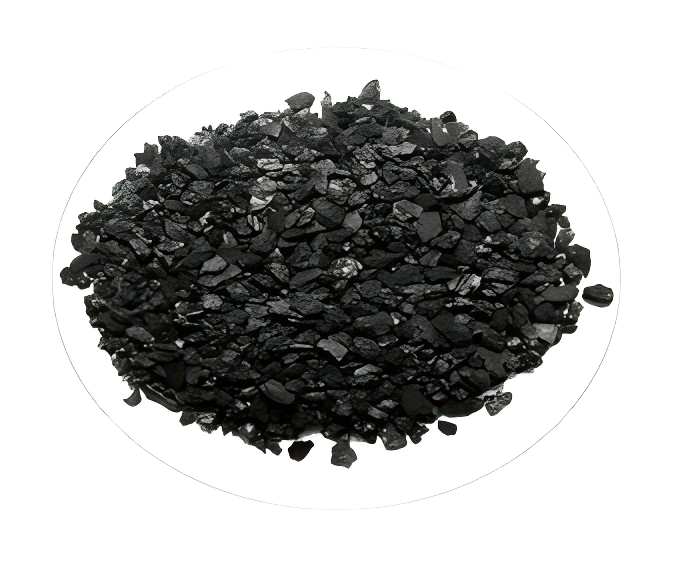
- Carbon Reductants: These strip oxygen from the metal oxides. Plants use metallurgical coke, semi-coke, and low-ash anthracite coal. Semi-coke is preferred for ferrosilicon because it provides high electrical resistance and high chemical reactivity.
- Fluxes: These adjust the melting point and viscosity of the molten slag. Common fluxes include limestone (CaCO3), dolomite (CaCO3 · MgCO3), and bauxite (Al2O3).
-
Raw materials must have high mechanical strength. If weak ores or coals crush under their own weight inside the furnace shaft, they generate fines that block gas channels and cause furnace blowouts.
How Do Plants Prepare and Proportion the Ore, Reductants, and Fluxes?
Raw materials move from open storage bays to the automated batching system through a sequence of mechanical steps:
- Primary Crushing: Jaw crushers reduce run-of-mine ores down to nominal lumps between 10 mm and 80 mm.
- Screening: Vibrating decks screen out fines under 5 mm. Fines divert to briquetting or sintering plants; they are not charged directly into the furnace.
- Moisture Drying: Reductants pass through rotary drying kilns to lower internal moisture below 1.5%. Wet coke lowers furnace temperatures and introduces hydrogen into the system.
- Automated Weigh Batching: Load cells underneath raw material bins weigh each ingredient according to software recipes. Skip hoists or inclined belts then deliver the batch to overhead furnace charging pipes.
What Chemical Reactions Happen Inside the Submerged Arc Furnace?
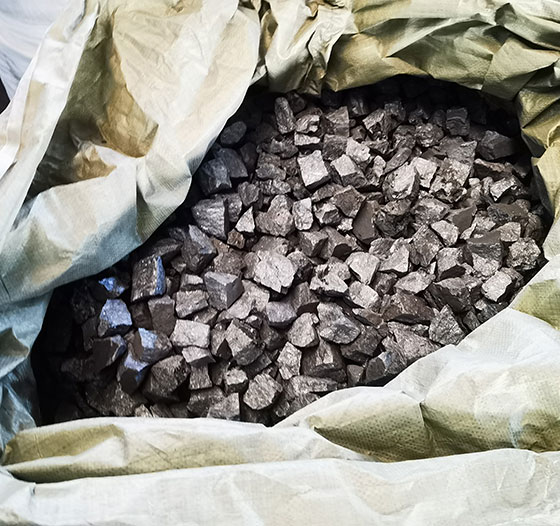
A submerged arc furnace uses electrical energy to drive carbothermic reduction reactions. Carbon strips oxygen from metal oxides at temperatures from 1400°C to 2000°C.
1. Ferrosilicon Smelting Chemistry
Quartzite (SiO2) reduces at high temperatures:
SiO2 + 2C → Si + 2CO(g)
The addition of steel scrap binds the silicon into iron silicides:
Fe + Si → FeSi
2. High-Carbon Ferrochrome Smelting Chemistry
Chromite ore contains iron and chromium oxides (FeO · Cr2O3):
FeO · Cr2O3 + 4C → (Fe · 2Cr) + 4CO(g)
Chromium reacts with carbon to form stable carbides, which is why standard ferrochrome contains 6% to 8% carbon:
7Cr + 3C → Cr7C3
How Do Söderberg Continuous Electrodes Operate Without Shutdowns?
Ferroalloy furnaces use continuous Söderberg self-baking carbon electrodes. These carry low-voltage, high-amperage alternating current (AC) into the reaction zone. Unlike pre-baked graphite electrodes, Söderberg electrodes are manufactured directly inside the running furnace.
- Casing Assembly: Plant workers weld cylindrical mild-steel casings (typically 1.0 to 1.6 meters in diameter) to the top of the electrode column.
- Paste Charging: Workers place carbonaceous electrode paste (made of calcined anthracite and coal-tar pitch) into the steel casing.
- Melting and Baking: As the electrode moves downward toward the furnace heat:
- At 80°C to 120°C, the paste softens and melts, filling the casing.
- At 450°C to 650°C, the pitch binder carbonizes, baking the paste into a solid carbon cylinder.
- Current Conduction: At the bottom, the baked carbon electrode carries current from copper contact shoes into the furnace charge, striking arcs that reach 2000°C.
- Continuous Slipping: Hydraulic slip clamps lower the electrode column as the tip burns away, maintaining continuous power without furnace shutdowns.
How Do Operators Manage Taphole Drilling and Molten Tapping?
The furnace produces liquid alloy and slag continuously, accumulating them on the carbon refractory hearth. Every two to three hours, operators open the taphole to drain the molten pool.
- Opening the Taphole: Operators use a track-mounted electric drill to cut into the carbon taphole face. If the taphole does not clear, an operator uses an oxygen lance (a steel pipe burning pure oxygen) to open the passage.
- Molten Stream Flow: The liquid alloy and slag exit together at temperatures between 1500°C and 1650°C.
- Separation by Density: The stream flows down a refractory-lined runner. A carbon skimmer block directs the light floating slag into a slag pot. The denser liquid metal flows beneath the skimmer into transfer ladles or direct casting beds.
- Closing the Taphole: A hydraulic mud gun swings into position and fires a pre-mixed refractory clay plug into the hole, stopping metal flow cleanly.
Which Ingot Casting Systems Minimize Slag Carryover?
Once outside the furnace, liquid metal must solidify into dense slabs. The casting method directly affects the mechanical purity and inclusion count of the alloy.
| Casting Method |
Equipment Layout |
Cooling Rate |
Typical Alloys Handled |
| Sand-Bed Pan Casting |
Shallow refractory or silica-sand ground pans |
4 to 8 hours (slow cooling) |
Low-cost standard FeSi 72, bulk HC FeMn |
| Cast-Iron Chill Molds |
Replaceable heavy cast-iron molds with mechanical ejectors |
20 to 45 minutes (fast cooling) |
Medium- and low-carbon FeMn, refined LC FeCr |
| Continuous Ingot Machines |
Moving chain with interconnected cast-iron molds |
5 to 10 minutes (continuous air cooling) |
Foundry-grade inoculants, special alloying briquettes |
Chill-mold casting prevents the alloy from absorbing silica sand from the ground. It also speeds up cooling, which prevents elements from separating into different zones inside the ingot.
How Do Crushing and Vibratory Screening Plants Control Fines?
Cooled alloy slabs are brittle. They pass through crushing and sizing plants to reach the dimensions specified on buyer contracts.
- Coarse Breaking: An excavator-mounted hydraulic breaker splits large solidified slabs into 200 mm pieces.
- Primary Crushing: A heavy-duty, low-speed jaw crusher crushes the pieces down to less than 80 mm. Slow jaw movement reduces the creation of fine powder.
- Secondary Crushing: Roll crushers or cone crushers break the material down to the contract size (e.g., 10–50 mm).
- Screening: Double-deck vibrating screens separate the material:
- Material above 50 mm returns to the crushers.
- Material between 10 mm and 50 mm goes into clean storage bins.
- Particles under 10 mm go to high-pressure roller presses to be pressed into briquettes.
What Off-Gas Systems Collect Silica Fume and Control Baghouse Dust?
Smelting generates hot exhaust gases carrying fine mineral and metal dust. Ferrosilicon production creates silicon monoxide gas (SiO), which oxidizes in the air above the furnace into micro-silica fume (SiO2).
Environmental protection plants operate a four-stage capture line:
- Fume Extraction Hood: A water-cooled hood sits over the furnace open area to collect rising hot gas and process dust.
- Heat Exchangers / Waste Heat Recovery: Gas temperatures drop from 800°C to below 200°C through forced-air tubular heat exchangers or waste-heat power generation boilers.
- Cyclone Separator: Heavy, abrasive carbon particles fall out of the gas stream by centrifugal force, protecting downstream filters.
- Pulse-Jet Baghouse: Thousands of woven fiberglass or PTFE filter bags filter the gas. Compressed air pulses shake the collected dust into collection hoppers.
Baghouse emissions must stay below 10 milligrams per normal cubic meter (10 mg/Nm3). The collected micro-silica powder is densified and sold globally as an additive for high-strength concrete.
.jpg)
What Are the Specific Power and Material Consumption Rates per Ton?
Electrical power represents 40% to 60% of total production costs in a submerged arc furnace plant. Consumption figures per finished metric ton depend on raw material purity and furnace scale.
| Alloy Type |
Electrical Power per MT |
Raw Ore Input per MT |
Carbon Reductant per MT |
Steel Scrap per MT |
| Ferrosilicon 75% |
8,400 – 9,000 kWh |
1,800 kg Quartzite |
920 kg Semi-Coke |
240 kg Scrap |
| HC Ferrochrome (60% Cr) |
3,800 – 4,300 kWh |
2,100 kg Chromite Ore |
550 kg Met Coke |
50 kg Scrap |
| HC Ferromanganese (78% Mn) |
2,600 – 3,200 kWh |
1,950 kg Manganese Ore |
550 kg Met Coke |
80 kg Scrap |
| Silicomanganese (65/17) |
3,800 – 4,400 kWh |
1,650 kg Mn Ore + Quartzite |
650 kg Coal / Semi-Coke |
100 kg Scrap |
Modern production facilities use furnaces with capacities between 25.5 MVA and 45 MVA. Larger furnace shells provide stable heat profiles, lowering power consumption per ton.
How Do In-Line Spectrometers Verify Melt Chemistry Before Solidification?
Adjusting chemistry after the metal has been cast into slabs is impossible. Modern smelters use rapid in-line testing during the tapping cycle:
- Dip Sampling: The operator dips a quartz immersion sampler into the ladle metal stream to extract a clean, chilled disc sample.
- Pneumatic Tube Transport: The sample travels through a compressed-air tube line to the central laboratory within 30 seconds.
- Sample Preparation: A technician surfaces the sample on a high-speed grinding wheel.
- Spectrometry Analysis: An Optical Emission Spectrometer (spark OES) burns the clean metallic surface. Within 45 seconds, the system provides accurate percentages for Si, Mn, Cr, Fe, C, P, S, and trace aluminum.
- Corrections: If silicon or manganese levels are below target, workers add high-grade master alloys directly into the transport ladle before casting.
How Do Operators Prevent Slag Reversion of Phosphorus and Sulfur?
Liquid slag in the ladle contains phosphorus oxide (P2O5) and sulfur compounds. Slag reversion occurs when chemical reactions force these impurities back out of the slag and into the liquid metal:
Slag P2O5 + 5Calloy → 2Palloy + 5CO(g)
To prevent this:
- Prompt Slag Skimming: Mechanical rakes skim the slag off the ladle lip immediately after tapping finishes.
- Basic Slag Conditioning: Operators add burnt lime (CaO) to maintain a slag basicity ratio (CaO/SiO2) above 1.2, keeping phosphorus bonded inside the slag structure.
- Temperature Control: Keeping the ladle free of overheating prevents phosphorus oxides from breaking down before pouring begins.
Why Source Directly from an Operating Smelting Plant in China?
China produces over 65% of global bulk ferroalloys. Smelting clusters operate in Inner Mongolia, Ningxia, Qinghai, and Guangxi. Sourcing directly from an operating smelter provides commercial and operational advantages:
| Commercial Factor |
Direct Chinese Smelting Plant |
Intermediate Port Broker |
| Traceability |
Direct link between ladle heat number, bag lot, and test certificate |
Mixed cargo lots sourced from multiple unverified workshops |
| Screen Control |
Crushing and screening done to buyer order specifications |
Fines accumulate from repeated dumping and handling |
| Pricing Transparency |
Direct factory price based on raw power and ore costs |
Added speculative trading and local storage markups |
| Quality Control |
On-site inspections, factory visits, and live testing |
Off-site tests run on selected, unrepresentative samples |
What Third-Party Inspection Steps Apply Under EN 10204 3.2?
International buyers frequently request third-party inspection agencies (such as SGS, Bureau Veritas, or Intertek) to witness production and certification under the EN 10204 3.2 standard.
An EN 10204 3.2 inspection covers:
- Raw Material Checks: Inspecting furnace feed stockpiles to confirm ore grades and low-phosphorus coke inputs.
- Tapping and Ingot Witnessing: Verifying furnace heats and observing direct chill-pan or sand-bed pouring.
- ISO 4552 Sampling: Collecting representative samples from packed big bags during container stuffing.
- Independent Lab Tests: Running XRF, ICP, and wet-chemical tests at an accredited external laboratory to verify the mill's internal results.
- Sieve Analysis Verification: Running vibratory screen checks to confirm fines stay below contract limits.
- Container Loading Oversight: Checking container cleanliness, big-bag loops, and inner plastic liners, followed by container seal verification.
How Do You Request a Binding Commercial Quotation for Ocean Freight?
To request a formal CIF or FOB quotation from our export sales division, provide the following operational parameters:
- Target Product Grade: (e.g., FeSi 72%, FeSi 75%, HC FeCr 60%, SiMn 65/17)
- Chemical Impurity Limits: State your limits for carbon, phosphorus, sulfur, and aluminum.
- Particle Size Specification: (e.g., 10–50 mm with max 5% fines under 10 mm)
- Order Tonnage: Number of standard 20-foot dry containers (approx. 25–27 metric tons per container) or breakbulk tonnage.
- Packaging Type: 1000 kg or 1250 kg big bags with bottom discharge spouts, or steel drums on pallets.
- Destination Port: Name of discharge port for ocean transit and maritime insurance calculations.

.jpg)