
Silicon nitride (Si3N4) is an important ceramic material used in high-temperature applications, advanced ceramics, and industrial components. Its high strength, wear resistance, and thermal stability make it suitable for demanding working environments.
However, not all silicon nitride powders have the same properties. One important difference is their crystal phase. Silicon nitride mainly exists in two crystal forms: alpha (α-Si3N4) and beta (β-Si3N4).
For manufacturers, choosing between alpha and beta silicon nitride powder can affect the sintering process, final microstructure, and product performance. Understanding their differences helps buyers select the right raw material for their production needs.
What Are Alpha and Beta Silicon Nitride Powder?
Alpha and beta silicon nitride are two different crystal structures of the same chemical compound, Si3N4. They have the same chemical formula but different atomic arrangements.
Alpha silicon nitride is commonly used as a starting material for liquid-phase sintering. During heating, it can dissolve in the liquid phase and form beta silicon nitride crystals.
Beta silicon nitride is a stable crystal phase under common ceramic processing conditions. It often appears as elongated or rod-like grains in sintered materials.
The main difference is not their chemical formula, but their crystal structure, particle characteristics, and behavior during heat treatment.
| Item | Alpha Si3N4 | Beta Si3N4 |
|---|---|---|
| Crystal phase | Alpha phase | Beta phase |
| Crystal structure | Trigonal | Hexagonal |
| Typical particle shape | Often fine or elongated | Often equiaxed or rod-like |
| Thermal behavior | Can transform into beta phase | Generally remains beta phase |
| Common role | Starting powder for sintering | Phase-controlled starting material or grain-growth component |
These are general characteristics. Actual particle shape and size depend on the powder manufacturing process and product grade.

How Does Alpha Silicon Nitride Affect Sinterability?
Alpha silicon nitride is widely used in the production of dense silicon nitride ceramics. During liquid-phase sintering, oxide additives can form a liquid phase at high temperatures.
Part of the alpha silicon nitride dissolves into this liquid phase. Beta silicon nitride then forms through precipitation and grain growth.
This process is important because it helps develop the microstructure of the finished ceramic product.
In many applications, manufacturers prefer alpha-rich starting powders because they allow the alpha-to-beta transformation to take place during sintering.
However, a high alpha content does not automatically guarantee better sintering results. Particle size, oxygen content, sintering additives, forming pressure, temperature, and nitrogen pressure also affect the final density.
For this reason, buyers should evaluate phase purity together with other powder characteristics.
What Are the Main Advantages of Beta Silicon Nitride Powder?
Beta silicon nitride has a different role in ceramic production. It is often used when manufacturers need to control the starting phase composition or the grain structure of the finished material.
Beta grains can develop into elongated structures under suitable sintering conditions. These grains may help deflect cracks and improve fracture toughness.
However, grain growth must be controlled. Excessive grain growth can reduce strength in some ceramic systems.
Beta-rich powders may also produce a more uniform initial grain structure in certain formulations. The actual result depends on particle size, grain shape, and the selected sintering process.
Therefore, beta silicon nitride is not simply better or worse than alpha silicon nitride. The correct choice depends on the target microstructure and production requirements.
How Does Phase Purity Influence Sintering Performance?
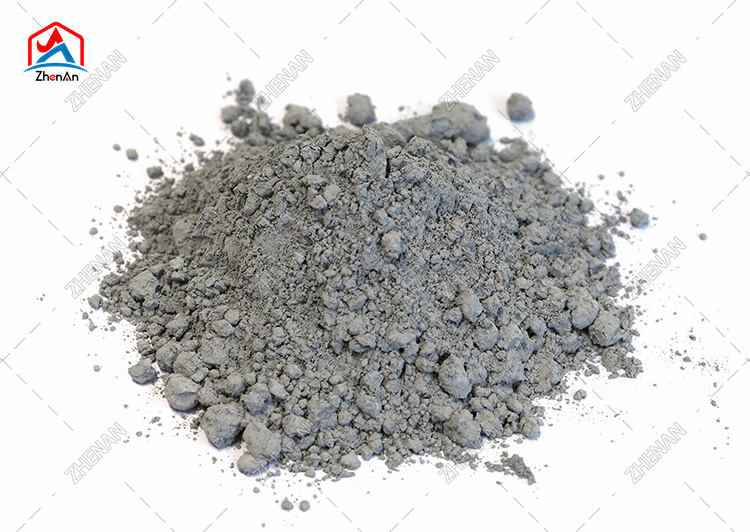
Phase purity describes the relative amounts of alpha and beta silicon nitride in a powder. It is usually reported as a percentage based on phase analysis.
For example, a powder with 95% alpha content contains a high proportion of the alpha phase. A powder with a higher beta content has a different starting phase composition.
Phase composition can influence the speed of the alpha-to-beta transformation and the development of the final grain structure.
However, phase purity should not be considered alone. Two powders with the same alpha content may have different sintering behavior because of differences in particle size, surface oxygen, and impurity levels.
For reliable material selection, manufacturers should consider the following parameters:
- Alpha and beta phase ratio: Shows the crystal phase composition.
- Oxygen content: Influences liquid-phase formation and sintering reactions.
- Particle size: Affects surface area, reaction rate, and powder packing.
- Specific surface area: Helps evaluate powder reactivity.
- Metal impurities: Iron, aluminum, calcium, and other elements may affect the final material.
- Carbon content: May influence reactions during high-temperature processing.
Why Are Particle Size and Oxygen Content Important?
Particle size is another important factor in silicon nitride powder selection.
Fine particles usually have a larger specific surface area. This can increase their reaction activity and help promote densification under suitable processing conditions.
However, very fine powders may also have stronger agglomeration and different forming behavior. This can make mixing and shaping more difficult.
Oxygen content also requires attention. Oxygen can exist within the particles or on their surfaces. During sintering, it can take part in reactions with oxide additives and influence liquid-phase formation.
Too much oxygen is not always beneficial. Its effect depends on the sintering system and the required properties of the finished ceramic.
For this reason, manufacturers should compare D50, D90, specific surface area, and oxygen content instead of choosing powder only by its average particle size.
Which Silicon Nitride Powder Should Manufacturers Choose?
The best choice depends on the final product and manufacturing process.
| Application Requirement | Powder Selection Consideration |
|---|---|
| Dense structural ceramics | Evaluate alpha-rich powder, particle size, oxygen content, and sintering additives. |
| Controlled beta grain structure | Consider beta content, grain morphology, and particle distribution. |
| High-strength ceramic components | Control phase transformation and final grain growth. |
| Special refractory formulations | Check chemical composition, grain size, and compatibility with the complete formulation. |
| Research and development | Compare different phase ratios under the same processing conditions. |
Before making a bulk purchase, it is advisable to test a small sample using the actual production formula. Laboratory sintering results can provide useful information about density, shrinkage, and microstructure.
How Can Buyers Evaluate Silicon Nitride Powder Quality?
When purchasing silicon nitride powder, buyers should request a complete technical data sheet and a Certificate of Analysis (COA).
The following information is useful when comparing different suppliers:
- Si3N4 content and nitrogen content
- Alpha and beta phase percentages
- D10, D50, and D90 particle size
- Oxygen and carbon content
- Iron, aluminum, calcium, and other impurities
- Specific surface area
- Batch consistency and packaging details
X-ray diffraction (XRD) is commonly used to identify and evaluate the crystal phases of silicon nitride. Quantitative phase analysis should use a suitable measurement and calculation method.
Laser diffraction can be used to measure particle size distribution, while suitable chemical analysis methods can determine oxygen and metallic impurities.
Buyers should also confirm the testing method, measurement conditions, and reporting basis when comparing COAs from different suppliers.
Why Choose a Reliable Silicon Nitride Powder Supplier?
Choosing the right supplier is just as important as selecting the correct phase composition.
For industrial buyers, a reliable supplier should provide clear product specifications, stable batch quality, and technical support during material selection.
At ZHEN AN, we supply silicon nitride materials for industrial and metallurgical applications. Different product grades can be discussed according to chemical composition, phase ratio, particle size, and customer requirements.
Our team can help buyers review technical specifications and select a suitable product for their production process.
Whether you need alpha-rich silicon nitride powder, beta-rich silicon nitride powder, or a customized particle size, please contact our team to discuss your requirements.
Send us your target phase ratio, particle size, and chemical specifications to request product details and a quotation.
Frequently Asked Questions About Alpha and Beta Silicon Nitride
1. What Is the Main Difference Between Alpha and Beta Silicon Nitride?
The main difference is their crystal structure. Alpha silicon nitride can transform into beta silicon nitride during suitable sintering processes. Beta silicon nitride is often associated with elongated grains in finished ceramics.
2. Is Alpha Silicon Nitride Better for Sintering?
Alpha-rich powder is commonly used as a starting material for liquid-phase sintering. However, the best powder depends on particle size, oxygen content, additives, and the required final properties.
3. Can Beta Silicon Nitride Transform Into Alpha Silicon Nitride?
Under common ceramic sintering conditions, the important transformation is from alpha to beta. The reverse transformation is not the normal process used for manufacturing dense silicon nitride ceramics.
4. How Is Alpha Phase Content Measured?
X-ray diffraction (XRD) is commonly used to identify and quantify alpha and beta phases in silicon nitride powder.
5. What Particle Size Is Suitable for Silicon Nitride Powder?
There is no single particle size for every application. Fine powders may be suitable for dense ceramic production, while other processes may require different particle size distributions.
6. What Information Should I Request Before Buying?
Ask for the chemical composition, alpha/beta ratio, D50, D90, oxygen content, impurity levels, packaging, and a recent batch COA.